
Federal budget’s trickle down will impact local green home initiatives, infrastructure projects
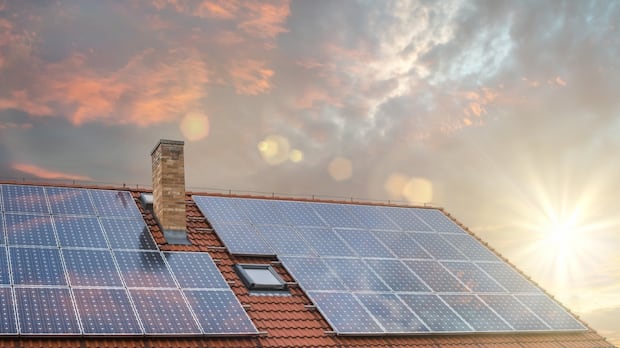
A “wildly popular” program that helped people invest in green technology for their homes was abruptly cut off last month and a Guelph company says it’s shocking the federal budget didn’t announce a new measure to replace it.
Mike Nagy is a solar designer and advisor at Guelph Solar and he says the 10-year interest-free Canada Greener Home Loan program helped people in Ontario add net metering to their homes — when a person can generate renewable electricity for your own use while sending excess power to the grid. The program was ended on Oct. 1.
“It really caught the industry off guard here in Ontario, especially because each province has their own incentives, but there’s zero in Ontario for net metering,” Nagy told the CBC Radio call-in program Ontario Today.
“We were getting calls from our customers very upset that it was cancelled, first of all. And then we were saying, let’s wait for the budget. And now we have the disappointing news just to go back to them saying, you know, there is no loan.”
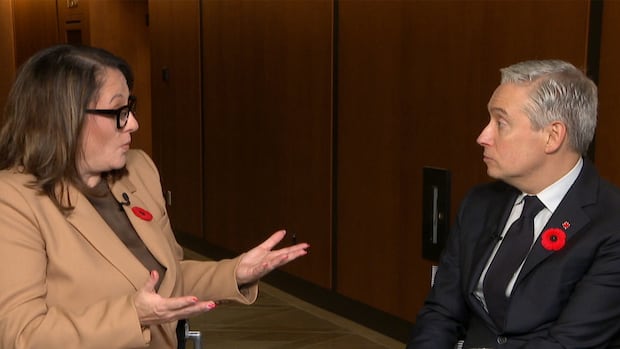
CBC’s chief political correspondent Rosemary Barton asks Finance Minister François-Philippe Champagne about what makes this budget different from those of previous Liberal governments and how it can help Canadians.
Nagy says Guelph Solar had customers ready to move forward, and while the company has told people solar will pay off in the long-run, it will no doubt impact the decision of some people to move forward.
“We’ve missed the citizens here. And this project was so wildly popular, it ran out of money and it was topped up again,” Nagy said.
“This is people actually wanting to meet personal climate goals, while saving money, and this has just now been handicapped severely.”
Not only will getting rid of this program hurt individuals who want to make their homes more green. Nagy said it will also impact businesses.
“Small to medium businesses have always been the economic and job drivers of the country yet over and over again political policies do not recognize and reward that reality,” he said.
“The solar industry employs a lot of different people from trades to professional engineers. The federal greener homes loan was a huge inducement to people investing in their local economies while saving lots of money and helping the climate.”
Budget recognizes municipalities play ‘important role’
Kitchener Mayor Berry Vrbanovic says the federal budget was “an important step in the right direction” for the city because it had investments for housing and infrastructure.
He said the biggest news was the Building Community Strong Fund, which will provide $51 billion over 10 years. Some of that money, he noted, was already promised through other programs and has just been redirected into this new fund.
“I think this is a budget that recognizes the important role that municipalities play in terms of the federal government and ambitions to set Canada on a new direction,” Vrbanovic told CBC K-W’s The Morning Edition with host Craig Norris.
Vrbanovic said what was missing from the federal budget — and which is an ask of the provincial government, too — is the creation of a long-term fiscal plan for municipal infrastructure.
“The fact that we are seeing significant investments is important, but in order to send the kind of signals that we believe are necessary, in terms of the long-term strategy here for the future of Canada, we think that reference to the longer term plan in order to help us continue to build housing strength and trade corridors, support economic growth, would have been really the icing on the cake that we think is key and would have liked to see stronger reference to that,” he said.
The Morning Edition – K-W7:00Kitchener mayor reacts to 2025 federal budget
The federal government has released its budget. How does that information trickle down to the cities and townships here in Waterloo region? Kitchener Mayor Berry Vrbanovic talks about how the budget may affect the municipality.
Regional Chair Karen Redman said she thought it was “encouraging” the federal budget appeared to align with the region’s priorities for housing, growth, and infrastructure.
“New homes need drinking water, roads, and services to connect our communities. These investments will help us unlock new housing supply, support economic development, and advance projects that reduce emissions and improve active transportation,” Redman said in a statement to CBC News.
“We look forward to working with our federal partners as Waterloo region grows to one million residents.”
Budget ‘a massive spend fest,’ Opposition MP says
Conservative MP Matt Strauss, who represents the riding of Kitchener South-Hespeler, says he didn’t feel like the budget offered much of anything to make life better for people in his riding.
“We’re going through a hard time. We need to make some hard decisions and I don’t see hard decisions. I just see a massive spend fest,” he told CBC News Tuesday after the budget was delivered.
He said he was also surprised to see little to no mention of health care in the budget. Strauss is a medical doctor and he said one of his children had to go to the emergency room on Monday night, so health care “is obviously very close to my heart.”

“I know it’s a top issue nationally and I didn’t hear any plan to fix that. So that was concerning as well,” he said.
He says he plans to oppose the budget and the Conservatives will move forward with the task of “exposing, opposing and proposing” what is in the budget, meaning that along with pointing out what they think is wrong, they “will be proposing better measures.”
Strauss says he also wants to hear from people in his riding. Next week, MPs are in their home ridings for a constituency week and to mark Remembrance Day.
“I am looking forward to connecting with every single constituent who wants to connect with me,” he said.
link